Jams, Jellies, Pickles & Relishes
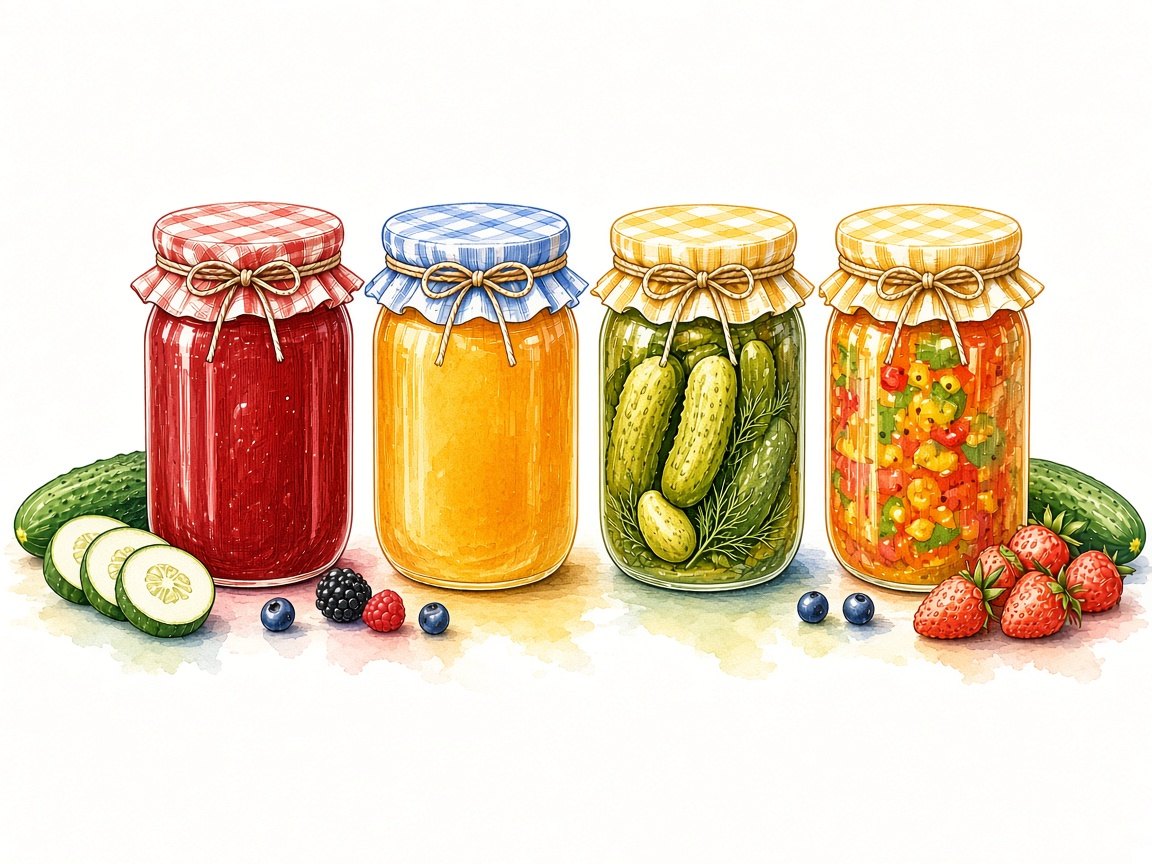
5 recipes
Pantry Pleasers
Kitchen tips
- EQUIPMENT FOR JELLY MAKING: You will need a large kettle with a broad, flat bottom. This will allow the sugar and juice mixture to mix quickly and evenly. You will also need a long-handled spoon for skimming the jelly, a pair of tongs for removing the glasses from the hot water and a small pan for heating the paraffin.
- Before Storing: Let jellied fruit products stand at least 8 hours to avoid breaking the gel. Cover with metal or paper lids. Store in a cool, dry place. The shorter the storage time, the better the eating.
- Preventing skin on sauces and jellies: Spread a thin layer of melted butter or cream over jellies, puddings and other sauces right after cooking. Stir and all the skin and foam will disappear.
- Hollow pickles are thought to be caused by faulty growth or staleness of cucumbers.
- Soft pickles are caused by using brine or vinegar which is too weak, not keeping pickles covered with liquid, not keeping scum removed from top of brine, not heating enough to destroy organisms of spoilage, or not sealing jars airtight while boiling hot.
- Shriveled pickles are caused by adding too much salt, sugar or vinegar at one time.
- Cider vinegar is not necessary for making pickles and relishes. In fact, some expert home canners prefer to use white distilled vinegar. The important thing is to use a high grade product.
- If neither fresh nor dried dill is available, dill seed may be used in making pickles. 2 or 3 tablespoons dill seed are needed for each quart pickles.
- Pickles are likely to spoil unless heated until almost boiling hot at the center, packed into jars, covered with boiling hot liquid and sealed at once or packed cold, covered with boiling liquid and processed 15 minutes in a boiling-water bath. The processing time is for pints and quarts. Half gallons require 25 minutes. The short cooking will not soften pickle.